Cycling for Bubaque 2019: Ireland: Valentia Island - Derrynasliggaun

July 1: Kilrush - Doolin (54 km - 586 m climb)

Dhe ride began quite 'smoothly' via gently rolling asphalt lanes. In the two pubs where I went for a drink - Tubridy Bar in Cooraclare and Westbridge Bar & Restaurant in Miltown Malbay - each time I was handed a note to study Cipriano.

A few kilometres before Lahinch I was passed by a German solo cyclist on an electric bike. We rode together for a while and talked about our respective travel destinations. When I asked her if her battery had enough range to cycle for a full day, she confided in me that she would regularly recharge it in a church. Most churches in Ireland are open all day. While charging, she did her daily prayers. She worked in Germany for a Christian organisation.

During the long climb up the cliff for Lahinch the German was obviously too fast for me, so I thought our paths separated there. In the last sharp bend with a sudden ocean view and the coastal town Lahinch however, she was waiting for me with a full mug of coffee she had bought in a little shop on the cliff. How sweet!

Lahinch was in party mode because just this weekend there began the Irish Open Golf Championships. The road passed by the well-secured golf course, where competitive golfers were already training.

After Lahinch, two more tough climbs over small shortcuts. The wind blew from northwest, which didn't help me today, but the reward for all the toil was generous: cycling on a plateau with wide vistas to the ocean horizon. In the long descent for Doolin I passed the 16th-century Doonagore castle. In Doolin, I stayed at a campsite overlooking the Moher cliffs.

Lahinch

Lahinch

2 July - walk on the Moher Cliffs

Today I walked from Doolin across the majestic Moher cliffs to the visitor centre. A walk totalling 14 kilometres that I enjoyed intensely.

July 3: Doolin - Carran (33 km - 431 m climb)

On the way to Carran, near The Burren national park, I passed Kilfenora, with The Burren visitor centre, a modest 12th-century cathedral and some great 'cross columns'. A little further on I passed Noughaval, with another pretty little church with old cemetery. In this desolate 'Burren' landscape, with stone walls, ruins of forts and tombstones and mounds that are said to date back to the Neolithic period, you can feel the history and spirituality of our 'ancestry' breathe. A very geologically and historically charged landscape.

Nearby - it took me a diversion of about ten kilometres - I visited the great 'Poulnabrone' dolmen (main photo). He is an example of a portal tomb. In the 1980s, the remains of 33 skeletons dating from 5800 to 5200 years old were excavated there. Around them are the typical flattened split limestone rocks of The Burren. At the time of the dolmen's construction, the area was still forested. During the later ice age were those forests wiped out by glaciers which descended from the hills of Connemara, and which included large granite boulders ('boulders') left behind that you can still notice here and there in the landscape today. A very special landscape that really appeals to me.

4 July: Carran - Corofin via The Burren National Park (20 km - 358 m climb)

On the way to the The Burren park I passed a viewpoint where on the opposite side of the road there were also a number of early Christian 'penitential cairns' (cairns) were located. Pilgrims on their way to nearby monastery, founded in the 6th century by St. Colmcille, walked prayer laps around the cairns to atone for their sins before arriving at the monastery.

Penitentiaire steenhopen

Penitential cairns

In the Burren, I parked my bike in a place where there were still hikers' cars - there was no visitor centre or tavern in sight - for a walk around and over the Burren hills with their curious karakol structure.

This remarkable 'karsten' landscape formed between 360 and 300 million years ago. Back then, Ireland was still in the southern hemisphere and there was a shallow tropical ocean which occasionally ran dry. The present-day limestones were formed layer by layer by skeletons of sea creatures. At the lake At the foot of the hill it also smelt very salty, like on the coast. So at every pass here you encounter millions of years of creation and decay. That does make you think for a while, about, among other things, our insignificance and triviality in the bigger picture of cosmic and terrestrial history....

The action of carbon created cracks (crevasses) in the limestones (clints) which later became wider gorges (grikes) became o.i.v. acid rain. The water seeped down, where underground rivers and pools formed. When there was a lot of rainfall, fens formed here at very short notice because the rising water levels through the gorges rise above ground. According to locals I met along the way, this circular hike is sometimes impossible in winter because the lowest sections are completely flooded.
The bowl-shaped cavities in the limestones are called kamenitzas. They are also formed by the action of acidic rainwater. It must be a paradise for geologists and fossil hunters here....

Zoutmeer in The Burren

July 5: Corrofin - Creganna (49 km - 235 m climb)

Before leaving, I had my hair shortened at Tara's 'Hair Flair' salon in Corrofin. The interior of Tara's 'garage' catapulted me back to the years 1960. Tara cut my hair for free, in support of Cipriano's studies. I can transfer €20 to Reach Out's account! Thanks, Tara!

The wind was at my back today, so I decided not to bumble over any small bumpy roads, but to take an also fairly quiet R-road with a better road surface. This ran right through the plain behind the Burren hills and additionally passed by the beautiful and also salty-smelling lime pond Lough Bunny.

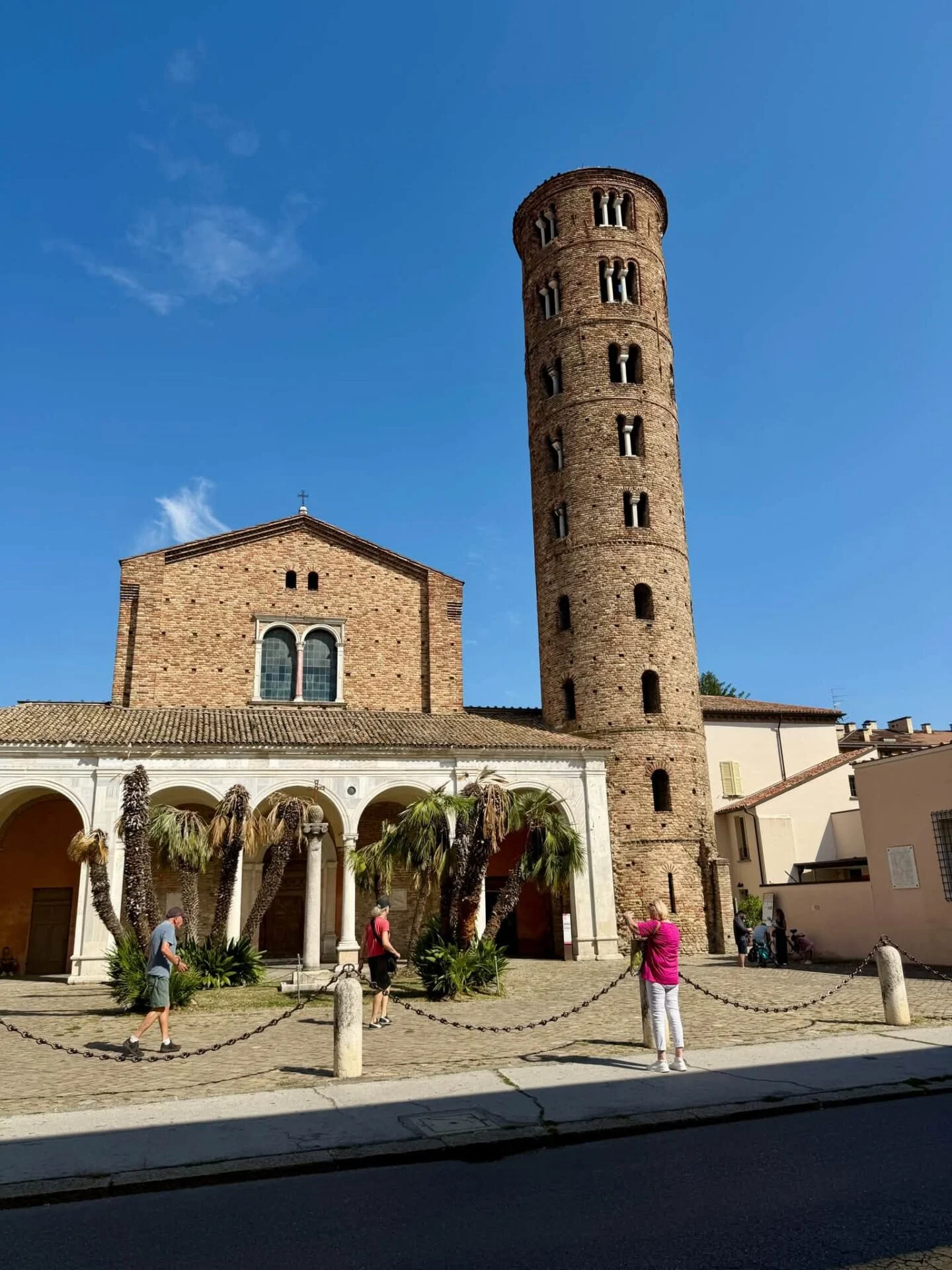
A little further on I ended up back in the spiritual sphere with the ruins of the Kilmacduagh monastic site. This monastery was founded in the 7th century by St. Colman Mac Duagh, who is also buried there.

The cathedral in the churchyard dates from the 11th century. Before that, there was probably a wooden church. The round tower was the monks' refuge in case of attack. Now there were just two doves in love sitting on one of the higher window sills. 

The tower deviates 2 feet from the perpendicular.

Kilmacduagh monastery

July 6: Creganna/Galway - Oughterard (50 km - 272 m climb)

A little before 10 am, it started to drizzle/rain for the rest of the day. After 12 km, I was in Galway, a very busy and lively town. I strolled around the cosy shopping-walking streets and a local market, and when it started pouring harder I sought shelter in the cathedral.
That is the youngest cathedral I have ever visited, I think. Younger than myself. It was built on the site of a former prison. Construction started in 1958 and she was inaugurated in 1965. There were still placards from the celebration of her 50th birthday, four years ago.

Then I drove north out of town because the Wild Atlantic Way is a bit too crowded for me. Inland, however, are no campsites, and the only hostel in the area was full. In the first pub where I went to hear if I could pitch my tent somewhere in a patch of garden or field, invited Cecilia me to come and stay with her. No bother with wet tent tonight and tomorrow morning. Tx Cecilia!

Cecilia

Cecilia

July 7: Oughterard - Derrynasliggaun (50 km - 381 m climb)

First via the fairly busy N59, from Maam Cross lovely bollocks on a quiet regional road. The hills here are higher, some +700m, the gradients a bit longer but much more gentle. Lovely cycling.

On the way, I passed by the museum site of the 19th-century Glengowla mine, a punishing example of worker exploitation that deserves a separate story on my blog.

In the village Maam Cross was a pony and dog show busy. An opportunity to soak up Ireland's rural atmosphere and traditions. Other sites I found worthy of photos were, of course the Connemara hills and lakes, a punishing feat of rural landscape art, and a peat field. In the village of Leenaun, which lies at the start of the 16km-long Killary fjord - the only one in Ireland - stood a petrol station which also catapulted me back to my youngest years.

Killary Fjord

Share this post on social media

Read more...

en_GB