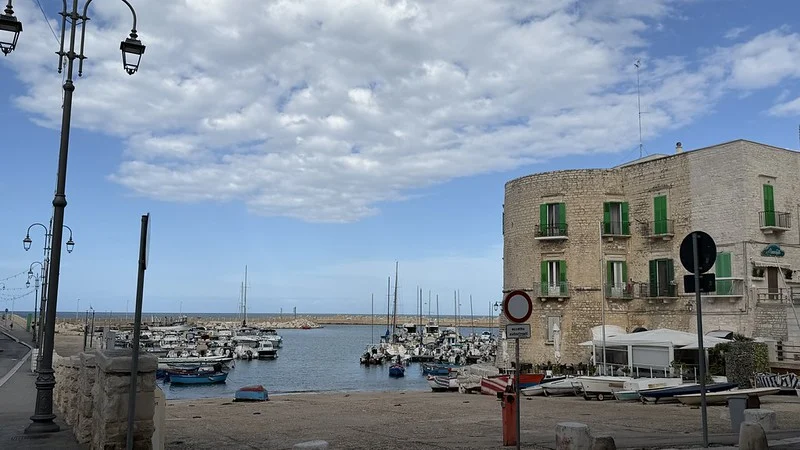
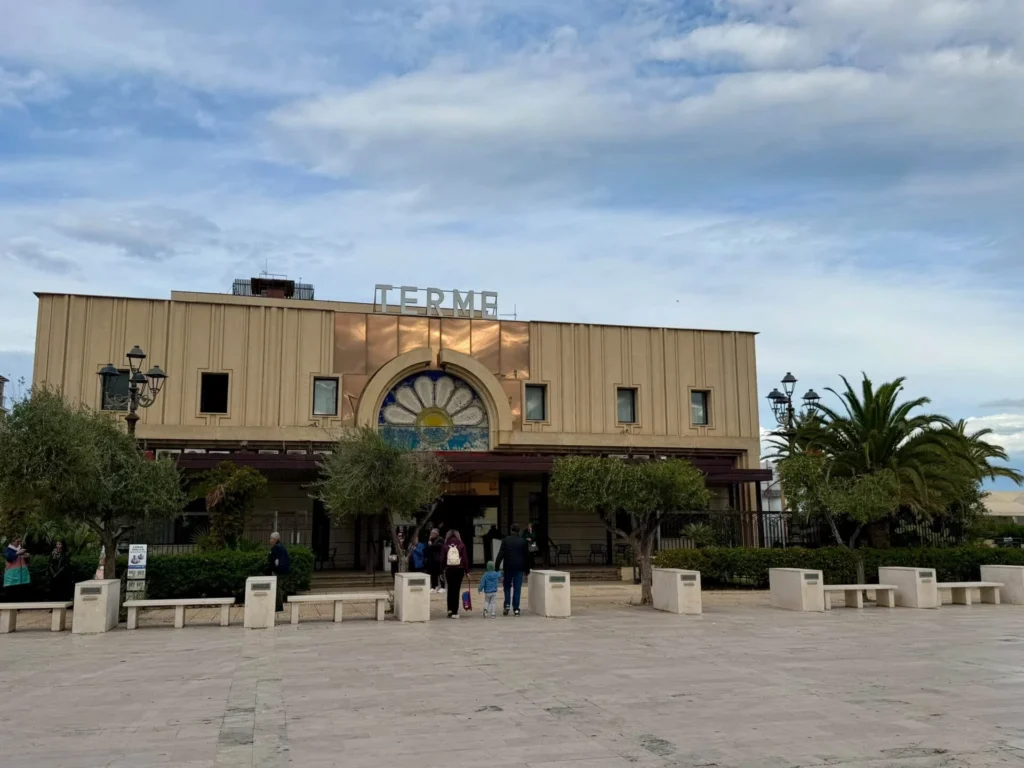
My final journey through the seaside resort Termoli all the way to my sister’s house in Acquaviva It was going to be tough. It couldn’t be otherwise; that village lies just under half a kilometre above sea level. A ride with a total elevation gain of around 700 metres.
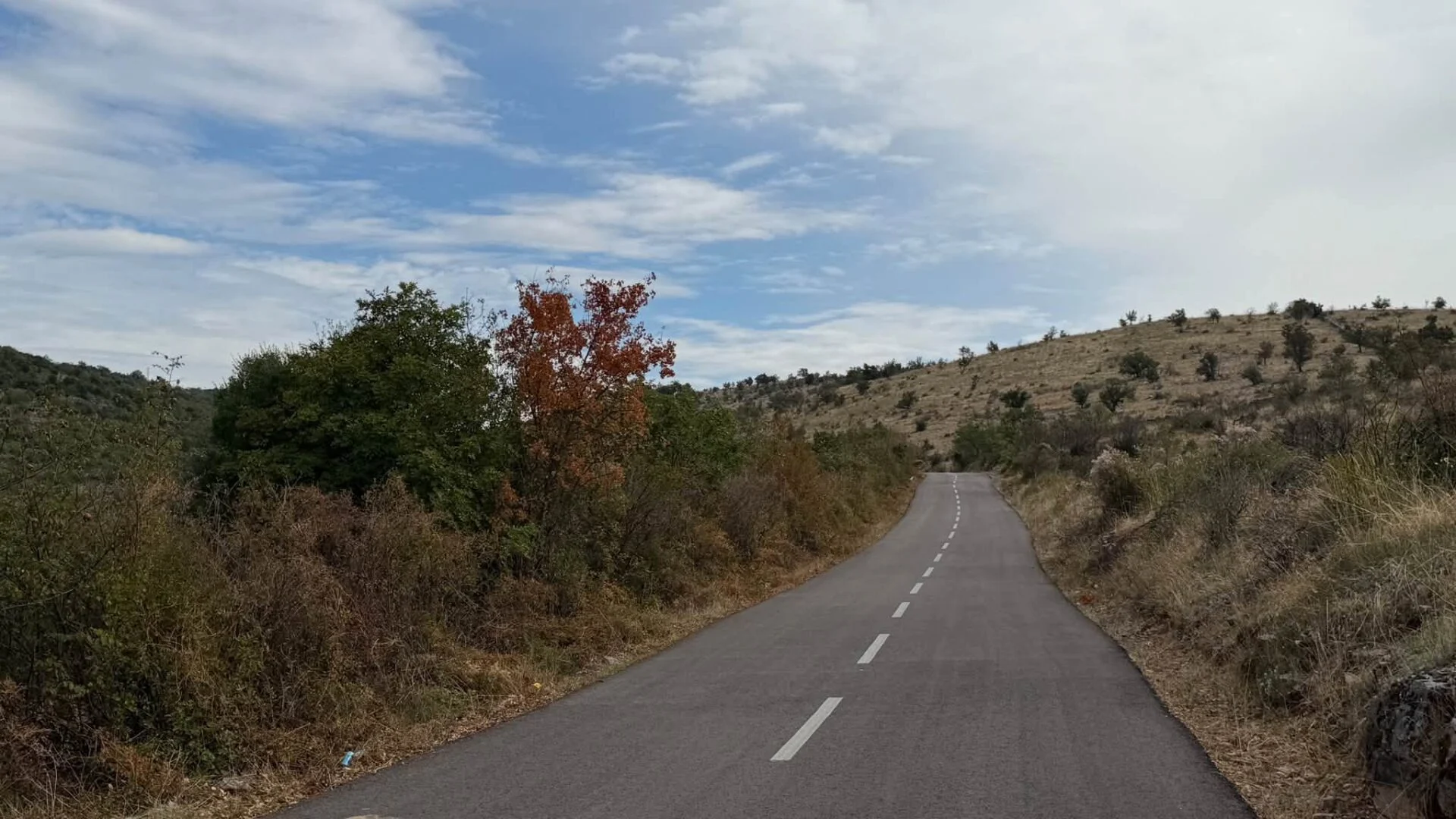
From Termoli At first, the route climbed gently along a ‘strada provinciale’. This was followed by small but absolutely stunning rural single-track roads and sheep tracks (traturros). As always, these were much steeper, with longer stretches where we had to push our bikes, with gradients of +10%.
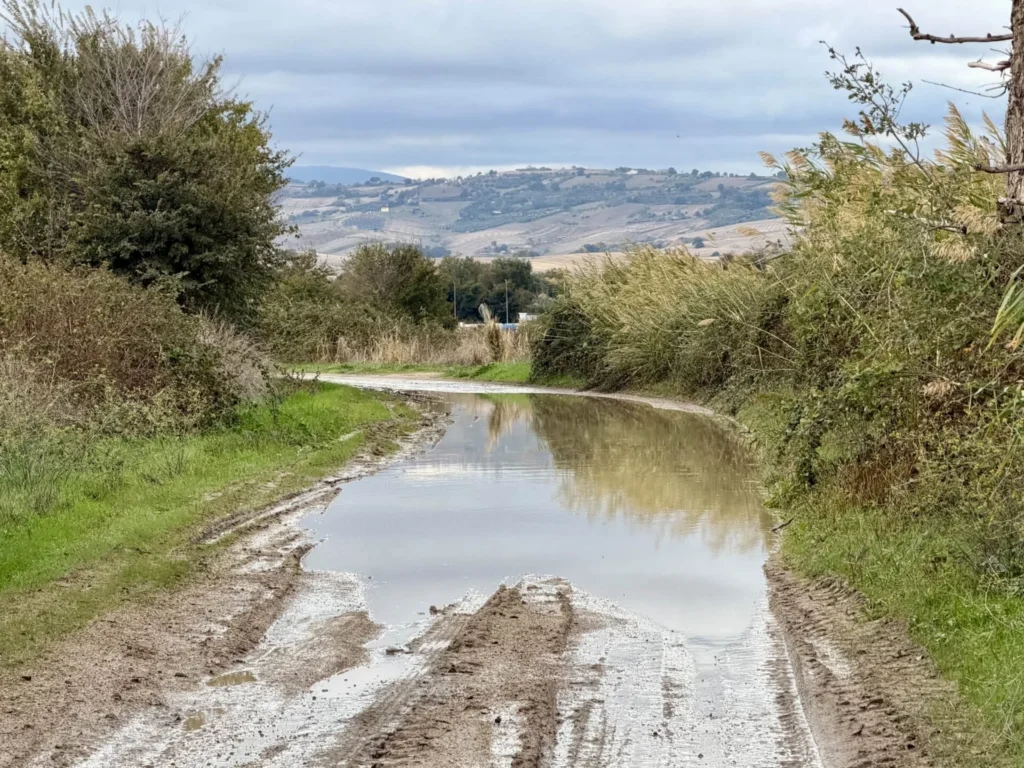
In a ‘dip’, my bike wheels got a refreshing dip in a puddle as wide as the track, stretching for about 40 metres. I let a tractor go first so I could gauge the depth of the puddle and managed to get through with dry feet. After all, you can’t cover 40 metres without pedalling.
For the village ‘
Montecilfone’, right at the top of a hill, I had to climb 5 kilometres non-stop, pushing my bike for the last 500 metres up a gradient of 10–13 per cent. Navigation app
komoot For some time now, it has been displaying the gradient of climbs whilst you’re cycling. It’s useful to know your ‘climbing stats’.
After that, the toughest bit was over and I was able to cycle another ten kilometres or so over gently rolling hills until Acquaviva Collecroce bulbs.
My tour around the Adriatic Sea is over.
I cycled the entire stretch along the Italian coast from Bari to Trieste, facing a headwind almost the whole time.
In the Balkans, I had to ‘cheating’ (taking shortcuts) on bus journeys, first because of the dangerously strong ‘bora’ wind in the north, and then because of the far too narrow and busy coastal road near Dubrovnik. And also because I was forced to cycle all the way to Durrës (Albania) as all international Jadrolinija ferry crossings from Croatia to Italy had been suspended until early November. One of their ships had suffered engine trouble and the spare parts were taking a long time to arrive. I don’t think that’s really normal, and what’s more, it wasn’t clearly stated on their website.
It was a tough journey. I had to keep adjusting my travel plans to account for unforeseen circumstances, and when travelling by bus, I was at the mercy of the bus drivers’ goodwill when it came to letting me take my bike on board. A tip for cyclists: if you pay them in cash, they’re much more likely to agree. But be warned: in peak season, that trick doesn’t always work because their luggage compartments are packed to the brim.
As I was on this trip much further east than, say, in Spain, it got dark about an hour earlier. That’s not very pleasant when camping out of season, as many cafés are closed at that time and you’re stuck sitting in your tent.
I was very disappointed that so few of my Facebook followers made a donation. After all, that is the ultimate aim of my travelogues and the time I spend on them.
I’m currently thinking about a different approach for future trips.
And I am, of course, immensely grateful to everyone who did donate something. They kept me going.
See you next time!