Compassion Rising Tour 2025: Gdansk

Aug 4: European Solidarity Centre and World War II Museum.

You can Gdansk not leave without visiting these two impressive buildings.

With the European Solidarity Center I managed to do so on Monday. On Tuesday, I had reserved the whole afternoon for the war museum, but did not manage to visit it. There was a queue of 200 metres queuing, and museum staff came to warn those waiting that, for security reasons, it would not be possible to get in before closing time.

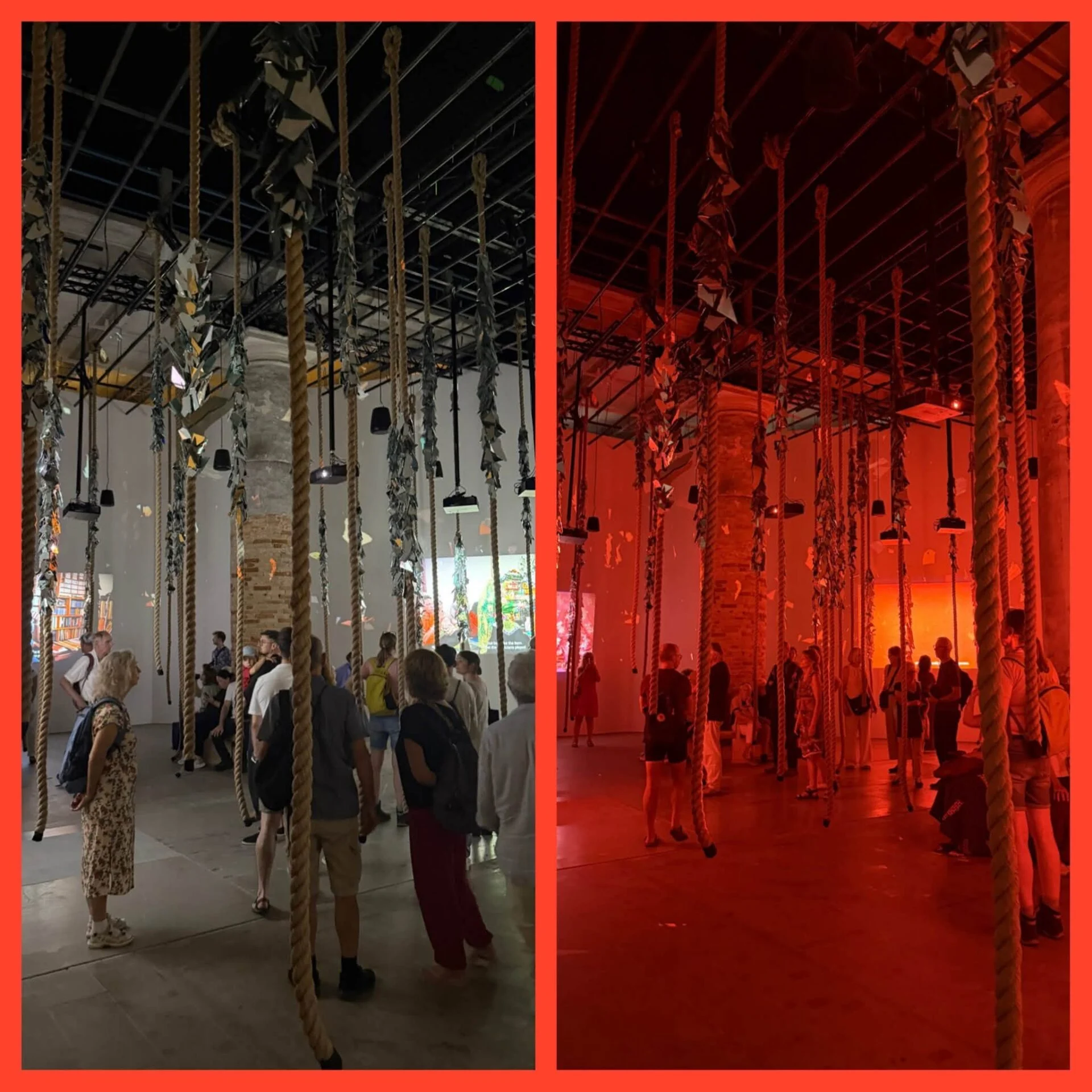
The European Solidarity Centre is an immense building constructed in rust-coloured Corten steel, reminiscent of a shipyard. It was erected with EU support and displays a detailed and highly interactive presentation of the history of workers' protests and the emergence of Solidarność, starting with the very first strikes in 1970.

Watching all the videos and photos is impossible in about two hours, but this museum certainly throws you back into the revolutionary atmosphere of the 1980s, which was also closely followed in our media.

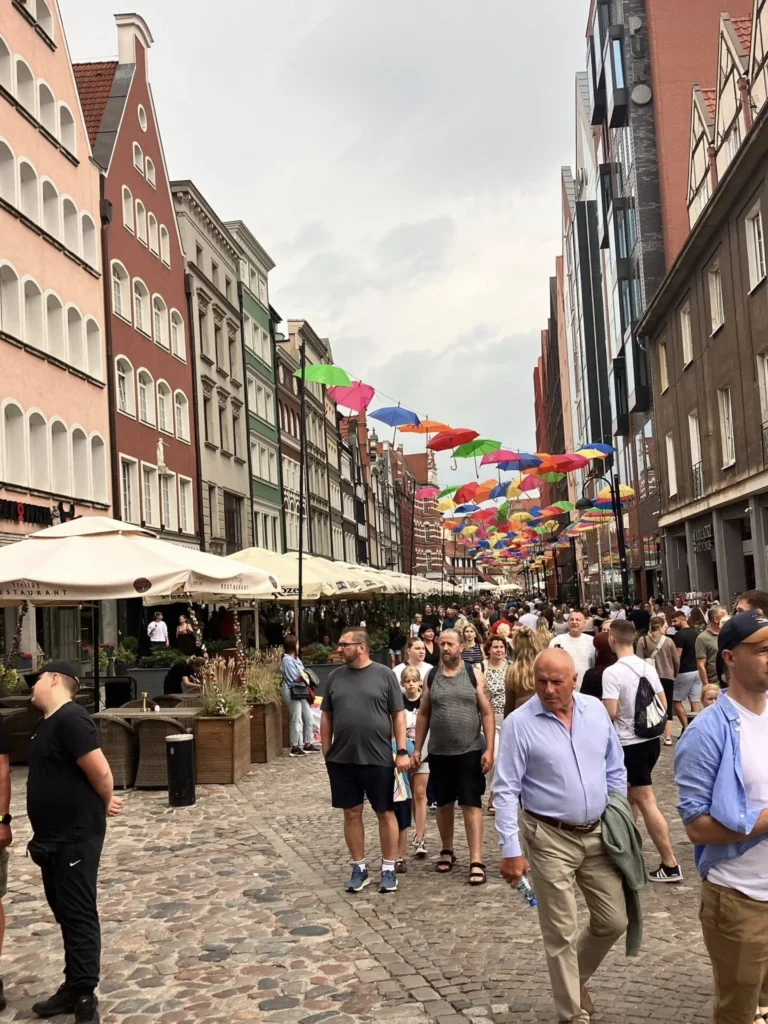
An evolution from empty shop shelves in Poland, which triggered the workers' protests, to today's hyper-consumption, as hundreds of stalls selling all sorts of things line all the streets of the Old Town in summer. This is probably the largest long-term open-air market in Europe.
The photos show some impressions of the presentation. If you ever come to Gdansk, be sure to visit.

European Solidarity Center

August 5: Museum Narodowe (National Museum)

In this museum, housed in a former monastery, I mainly appreciated the 14th- and 15th-century polychrome sculptures. These were commissioned by the clergy, the Teutonic Order of Knights, and wealthy families.
From 1350, art was also produced locally. Before that, much was purchased in Prague and England.

The second room was dedicated to Gothic art. The era of the Teutonic knights had ended and art was now more subject to German and Dutch influences.

This was followed by sections with very detailed painted wig portraits of notables, not really my thing.

On the ground floor, where the museum's crown jewel, Hans Memling's Last Judgement, normally hangs, four consecutive temporary exhibitions of light-sensitive engravings are now on display. Now it was the turn of Old German masters. Memling is unfortunately out of circulation until 2026.

The ground floor also contained departments with silverware, pewter objects and ceramics.

City women of Gdansk and Kings Mountain, 15th-16th century

5 August: Gdansk war museum - Post building with memorial - Amber museum

Because I had not gotten into the war museum, I was able to visit some other places in Gdansk.

To start with, I took a picture of the war museum, quite an architectural masterpiece.
On my way to the war museum, I passed the Postal Museum. There it told the story of the German attack on the postal building when they invaded Poland via Gdansk in 1939, because they suspected it contained important communication equipment.

There was a memorial in front of the post office building recalling this.

From there I walked to the Amber Museum. Everything you wanted to know about amber - geological, historical, economic and cultural - was thoroughly explained there. What I found most fascinating were the stones with fossils.

War Museum

5 August: Gdańsk Saint Brygidy basilica

This was no ordinary church visit with the traditional statues of saints and other glitz and glamour. The Saint Brygidy basilica had been closely associated with the labour movement seeking an independent union since the first uprisings in 1970.

Jerzy Popiełuszko, a young priest in communist Poland, joined the opposition movement Solidarność. His sermons, in which he often criticised the communist government, were broadcast by Radio Free America, which many Poles listened to clandestinely. For this reason, he was murdered by three agents of the Polish secret service in 1984. This led to huge protests and the perpetrators were tried and convicted of the murder shortly afterwards.

Furthermore, at the back of the church, there were steps down to a crypt with a wall full of skulls. Memento Mori...
The church's altar was also not ordinary: it was made up almost entirely of brilliantly lit amber (amber).

Saint Brygidy Basilica

Share this post on social media

Read more...

en_GB