Vilnius cathedral
Monday morning I first walked through the Uzupis district, a former rundown neighbourhood that was revamped by artists, squatters and creatives on the margins of society. In 1997, those residents proclaimed their neighbourhood as ‘independent republic’ with its own constitution, currency, anthem and president. The constitution was even translated into 25 languages.
Many galleries and artists' studios were still closed when I walked through this - by now somewhat commercialised - free-spirited neighbourhood, but many of the art expressions in Uzupis are in public spaces and accessible courtyards: murals, graffiti, sculptures, installations... A colourful neighbourhood.
Border crossing to Uzupis Republic
In the afternoon, I visited MO Museum: a private museum of modern and contemporary art, housed since 2018 in a building by the well-known architect Daniel Liebeskind.
‘In the evening, I returned towards Uzupis for an appointment with the local Tibet Support Group at Tibet Square, which is also located in the district. The Dalai Lama, who made a total of four visits to Lithuania, also went to the Republic of Uzupis twice: in 2013 to inaugurate a mandala and in 2018 to plant a Himalayan apple tree.
Tibet Square
After the ‘fraternisation and ennoblement’ we went for a drink on a cosy terrace next to the Vilnia River. That terrace ran rather late, so I did not find time to write a day's report.
On Tuesday, I strolled through the old town. Almost every street here has a church. Every Christian community here apparently has its own house of worship: Catholic, Orthodox, Greek Catholic... I liked the latter the most: no gaudy tinsel and glitter art, but sober, subdued murals. The church is also in dire need of restoration, the paint and occupation was crumbling off the walls. But I thought there was something to this.
St Anne and St Bernardino churches
Robertas for too-high Liebeskind building in Vilnius
The Museum of Occupations and Freedom Fights is located in a former KGB building (Russian secret service). Hundreds of photos and texts document the Russian occupation and the misdeeds and human rights violations committed by the Communist regime in Lithuania. Some rooms retained their original KGB furnishings. You were not in a good position when you were brought into this building as a citizen. In the basement were the interrogation rooms and prison cells.
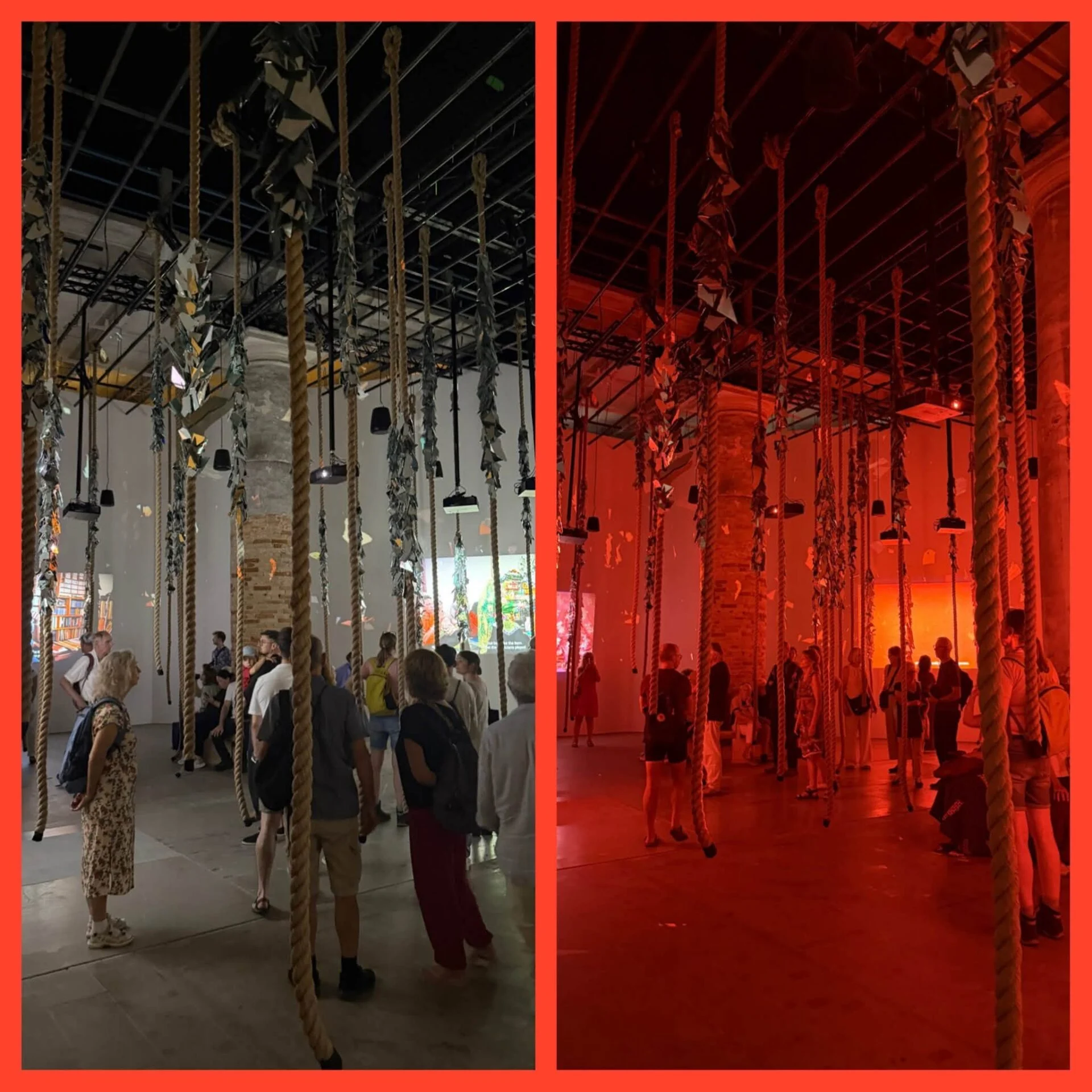
In the afternoon, I made my way to the Siuolaikinio Meno arts centre, good for another fine helping of contemporary art and installations. On the way back, I passed the Jewish ghetto. Only 5% of Vilnius' 60- to 80-thousand Jews survived the Holocaust.
Louisa Bufardezi-Groundplan: country size is determined by population size
On Thursday I am expected at the construction site of the Namgyal Stupa (under construction) in Rusenai, 40 km north-west of Vilnius. I had failed to extend my stay at the hostel by one night, but luckily I was able to stay with Robertas. In the evening, I cycled to his self-designed modernist house, in a wooded area about 5 km outside the city. Tomorrow, he will accompany me by bike as far as Rusenai.

16 September: Opening the door at Diamondway Buddhist Centre in Tallinn The centre's meditation sessions are open