Around the Adriatic Sea 2026: Balkan cities

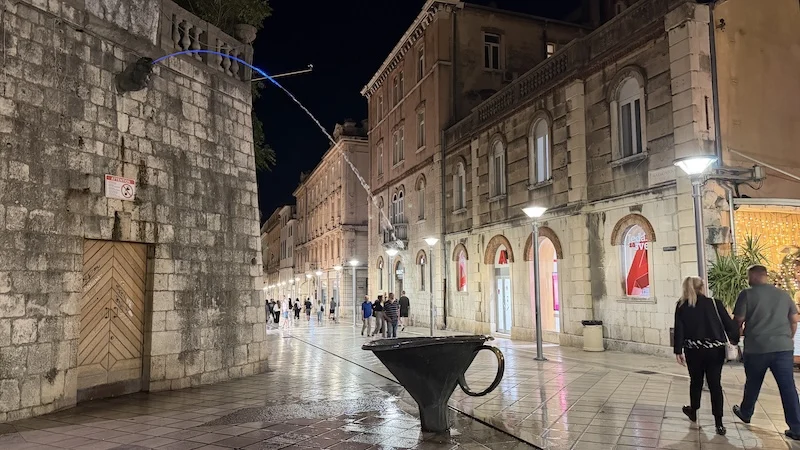
Hoofdstraat in oude stad Split

The photos of the cycle route are listed in reverse chronological order. Those of the towns are listed chronologically. Information about the location is included in the title and/or description.

4-6 okt: Stadbezoek Split, UNESCO werelderfgoed

Met de bus naar Split
 
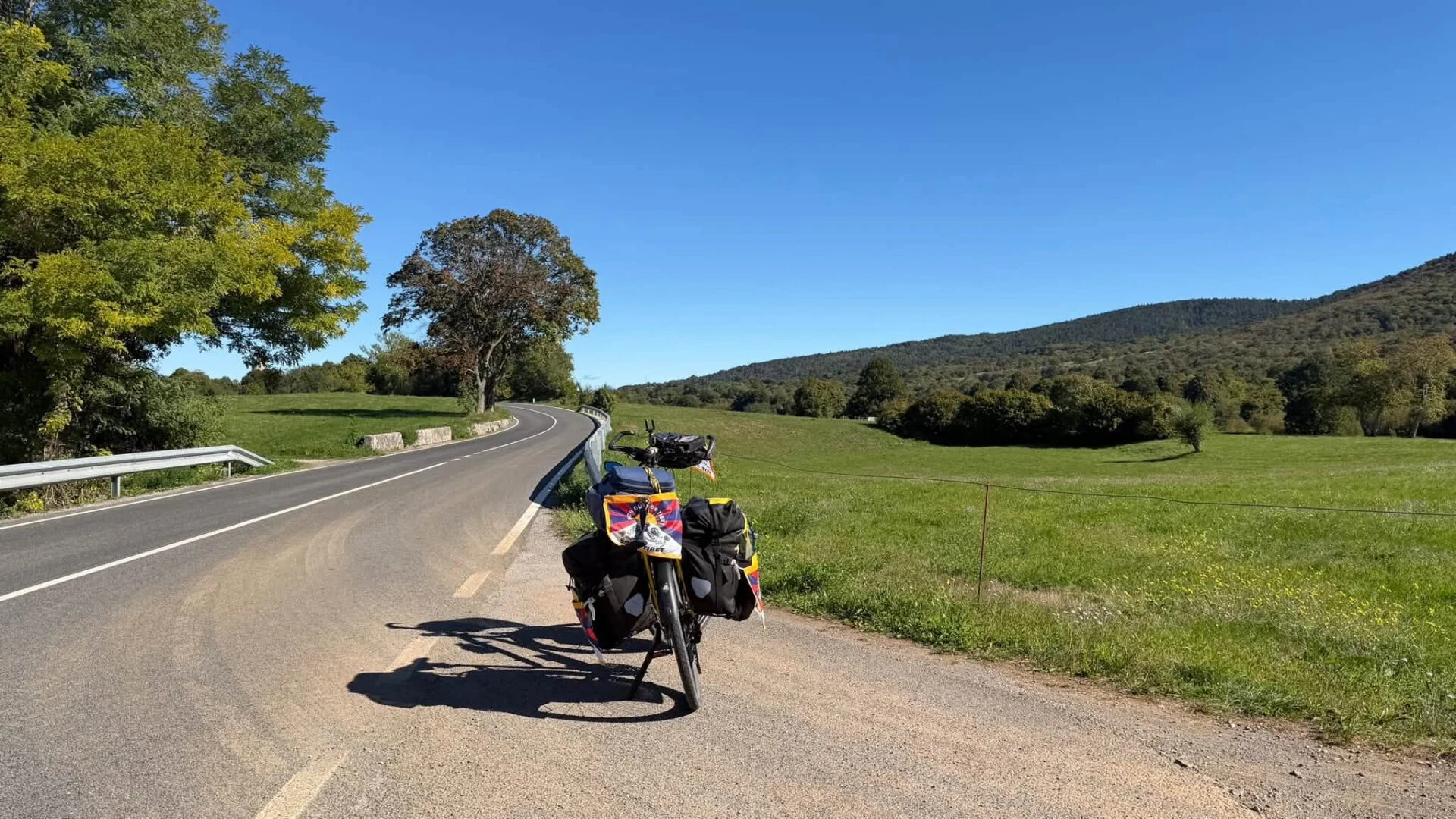
 Omdat in de regio van Senj een heftige bora valwind stond waarin fietsen levensgevaarlijk is wegens heel sterke onverwachte windstoten, nam ik de bus naar Split.
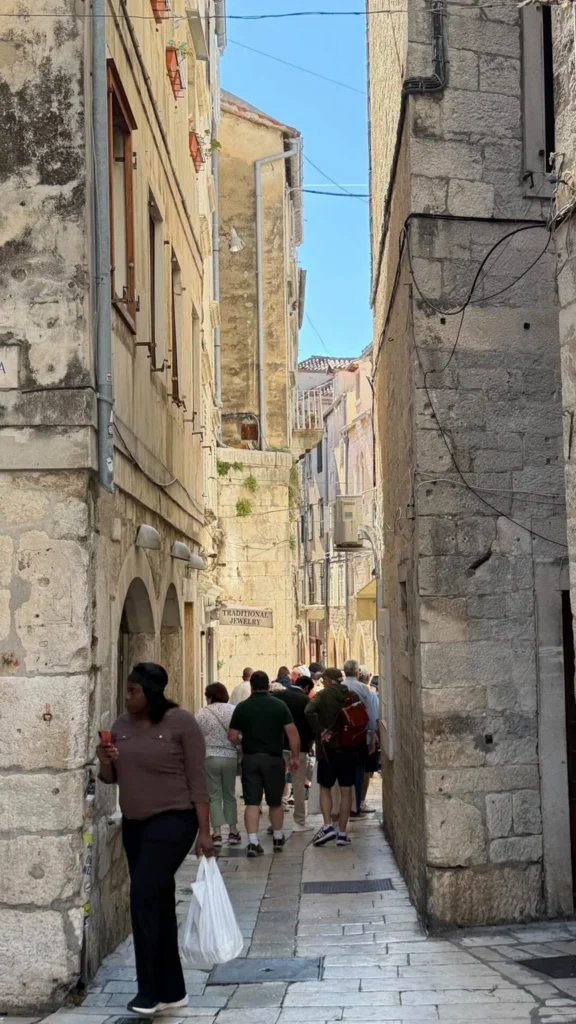
Omdat ik de hele dag — de rit duurde zes uur — op mijn Q had gezeten, maakte ik na het avondeten nog een wandeling door de oude stad. Die herinnerde me aan Dubrovnik, ook met glanzende gladde tegels waarop je snel uitglijdt. Veel heel smalle steegjes. Eigenlijk is het één grote uitgaansbuurt: restaurantjes, bars, snacks- en fastfoodstalletjes en voor het dagpubliek ook verschillende boetiekjes. In het midden de Kathedraal, Jupitertempel en thesaurie. Bij de foto’s zitten ook enkele sfeerbeelden van vandaag.

Split – Old Town

4 Oct: Split – Museum of Fine Arts

Art, art and more art
On the ground floor, there are two temporary exhibitions: a retrospective exhibition of Jurica Kezic (1936–2021), a well-known Croatian painter whose rather sombre works on textured surfaces did not particularly appeal to me. It was only during his early period that he produced colourful works.
 
I found the exhibition featuring work by Croatian artists responding to the socio-political context more fascinating.
Artists from the ‘Biafra’ circle produced socially critical work or painted scenes depicting the everyday lives of ordinary people as they really are.
 
Particularly striking were the barely concealing line drawings by Dragutin Trumbetas on the life of Slavic migrants in Germany. He himself worked as a ‘guest worker’ in Frankfurt from 1960 to 1990. He is, in fact, an exception; the theme of migration is scarcely addressed in Croatian art.
 
The understated black-and-white photographs of a performance by Zlatko Kopljar, kneeling in a posture of worship before the symbols of financial and artistic power in New York, struck me as very powerful in terms of symbolism. In doing so, he explicitly criticised the imbalance between the insignificant individual and the systems of power in society at that time.
 
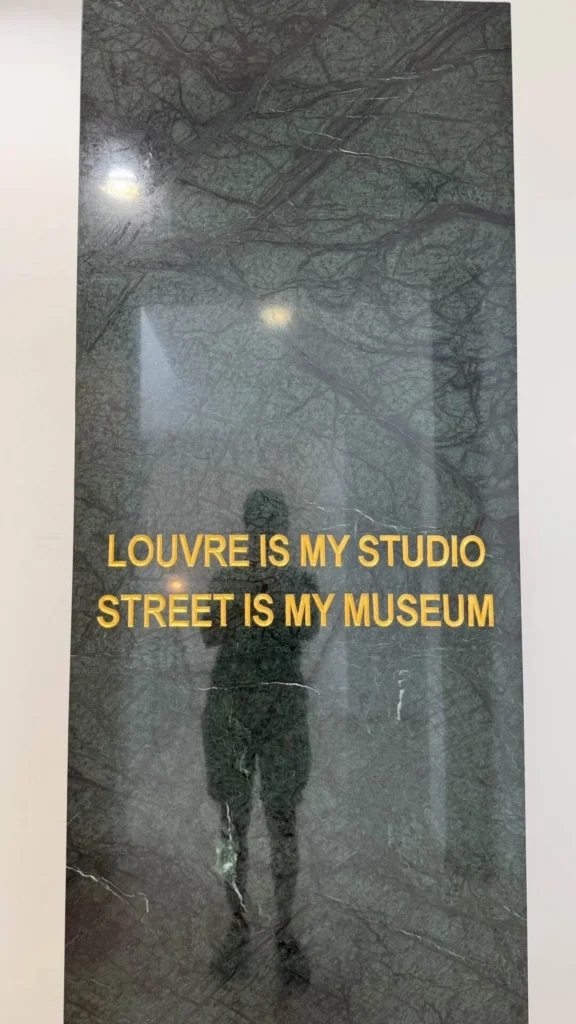
The permanent collection was on the second floor, featuring works from the 15th to the 20th century, mainly by Croatian artists. But by then my capacity to take it all in had already been exhausted, and I didn’t take any more photographs, except for the monumental line drawing of a complex battle scene from Tomislav Buntak and, to conclude, a conceptual work by Braco Dimitrijevic — a golden inscription carved into a marble column — which resulted in a special photograph.

Conceptual work by Braco Dimitrijevic

5 Oct: last day in Split

St Domnius Cathedral, Mount Marjan and a few more photos of the city and cats
Today, Monday, it was a bit less crowded in the old town and I finally bought a ticket to visit the cathedral. Yesterday, it was absolutely heaving in there. To be honest, I’ve had my fill of churches, but the octagonal shape of the St Domnius’s Cathedral It intrigued me. It also turns out to be the oldest functioning Catholic cathedral still in use in its original form, without any major renovations. It was consecrated in the 8th century, but it began its history in the 4th century as Diocletian’s Mausoleum.
 
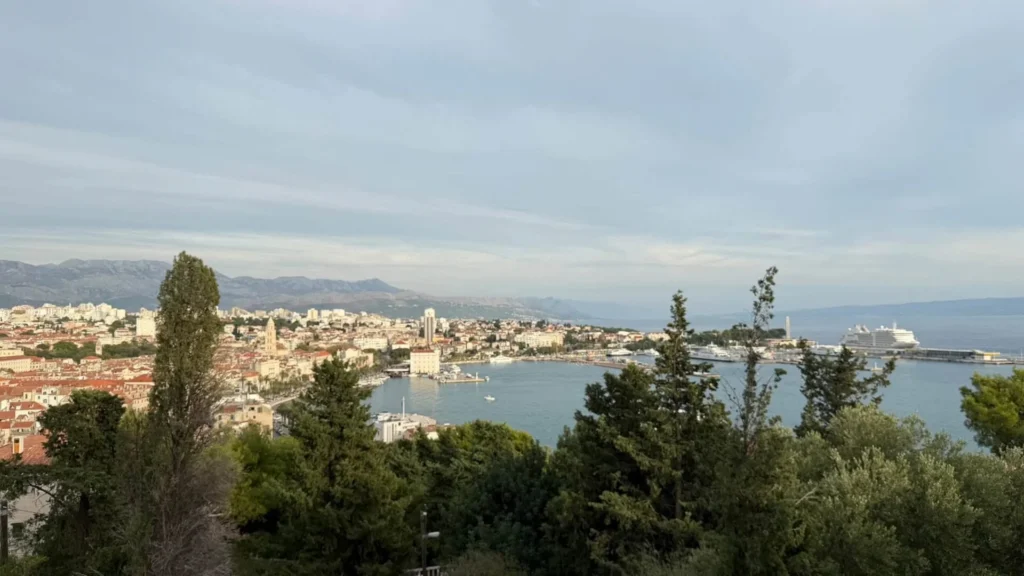
’That afternoon, I walked – or rather, I climbed the stairs – to the highest point on Mount Marjan, a 178-metre-high hill offering beautiful panoramic views of the city and the islands. According to ChatGPT, there were 800 steps from sea level. That could well be correct, if you count just over four steps for every metre of elevation.

View from Mount Marjan

The photos of the cycle route are listed in reverse chronological order. Those of the towns are listed in chronological order. Information about the location is included in the title and/or description.

Share this post on social media

Read more...

en_GB