Around the Adriatic Sea 2026: Trieste – Dubrovnik

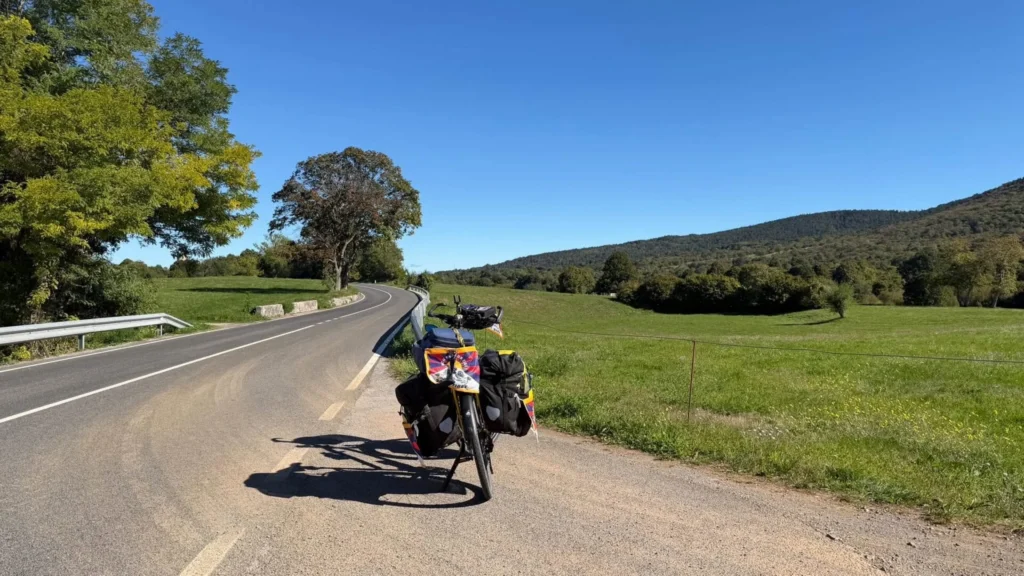
The photos of the cycle route are listed in reverse chronological order. Those of the towns are listed chronologically. Information about the location is included in the title and/or description.

Onderweg ontmoet ik zo veel vriendelijke, hulpvaardige of gastvrije mensen. Zij verdienen een eregalerij.

25 September: "forced" rest day in Trieste

Departure for Slovenia postponed
I was due to set off from Trieste on Thursday, but whilst I was putting together the English newsletter on Wednesday evening, I was suddenly struck by a sore throat, a headache and a dreadful dry cough. I slept very badly because of the coughing—and trying to stifle it for the sake of my flatmates. In the morning, half a pound of figs; my head felt light-headed, and I was dizzy…
 
I decided to wait until check-out time, but there was absolutely no improvement – quite the opposite, in fact. I was already struggling with the stairs up to the second floor. So I went to the chemist’s and booked an extra night at the hostel. I had to change rooms and didn’t have a bed between 11 am and 3 pm, but the sofa in the communal lounge did the job, and I dozed there for three hours, practically out cold.
 
After that, I went back to bed to sleep some more. By the evening, I was feeling a bit better. Thanks to the cough lozenges from the chemist, I had a cough-free night.
 
I can keep the ride short (15 km to Lokev) but with a 450-metre climb. A 15-kilometre journey from sea level up to the Ardennes ‘highlands’. To be continued.

25 Sep: Trieste – Lokev (SLO) (18.1 km – 520 m elevation gain)

Reached the top (of the mountain) after taking a sick day yesterday
The climb out of Trieste was gruelling. After a gently sloping 1 km warm-up section, I regularly encountered quite long stretches of around 10% that I couldn’t cover in one go. The key was to take regular breaks and give it a bit of a push now and then…
 
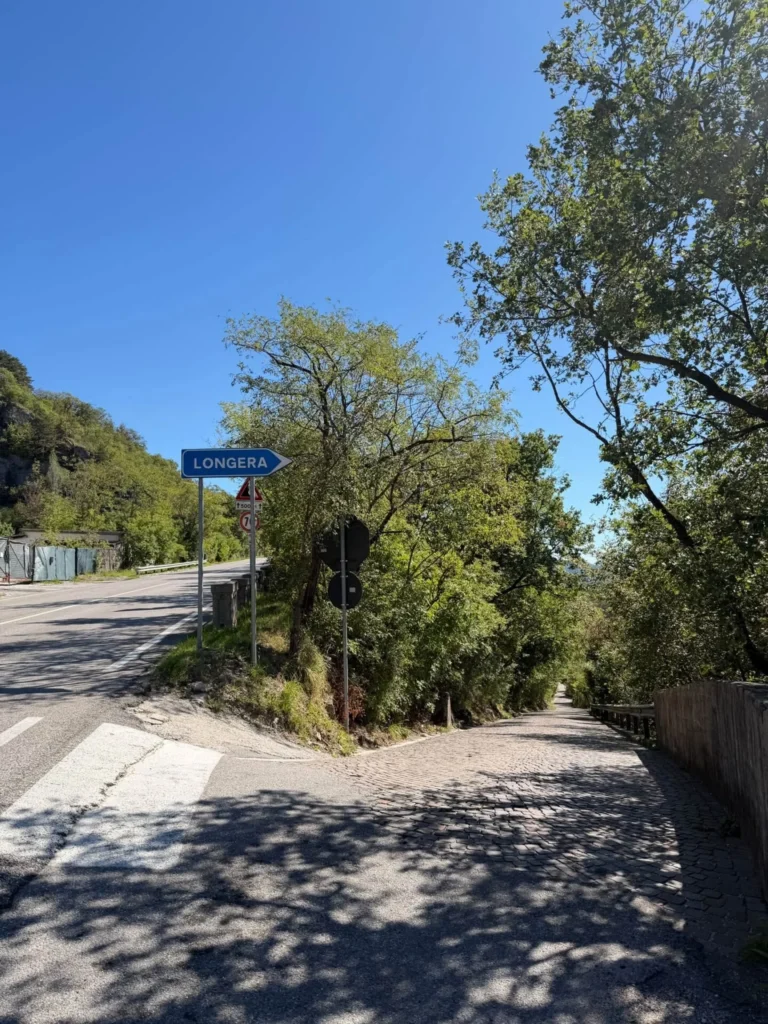
After 5 km, there was a brief respite. Fortunately, the second climb, over 2.5 km, was less steep. But I had to push once, to get out of the village Longera to get back on the main road, a 11% climb over cobbles. Otherwise, a gentle climb at 4-5% until I reach Lokev arrived.
 
Still, I’m glad I didn’t start it yesterday. I’d never have managed it.

2nd steep slope

26 Sep: Lokev – Illiska Bistrica (49 km – 410 m elevation gain)

Struggling with a sat-nav app
After a few kilometres of hard going over coarse gravel on the TransDinarica route – with wheels that skidded when the slopes got a bit steeper and a bike that slid backwards on the cobbles when I stopped – I decided not to follow that route any longer and to switch to the tarmac komoot an alternative I’d planned as a back-up. I was still feeling the effects of my cold, and the effort required on the rough gravel proved too much for me to sustain for long.
 
Then a battle with the navigation apps began. Activating the Komoot route was no problem, but Transdinarica uses the Ride with GPS app, and I couldn’t turn that route off. The result: a really annoying beep every minute telling me I’d strayed from the route. I asked AI for help to stop the navigation, put my phone on ‘silent’, deleted the route from the app… All of which none advance (useless).
 
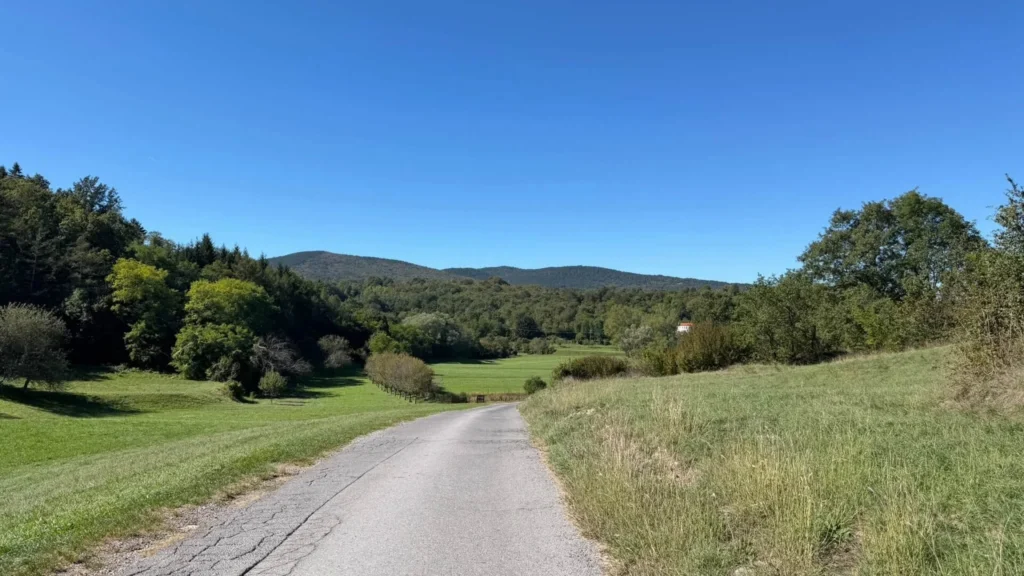
Eventually, I got so fed up with those non-stop jingles that I deleted the whole app from my phone. Then peace and quiet returned, and I followed the Komoot route through the Vela Voda Valley to Ilirska Bistrica. A pleasant paddle along a gently undulating, fairly quiet tarmac path through the beautiful valley.
 
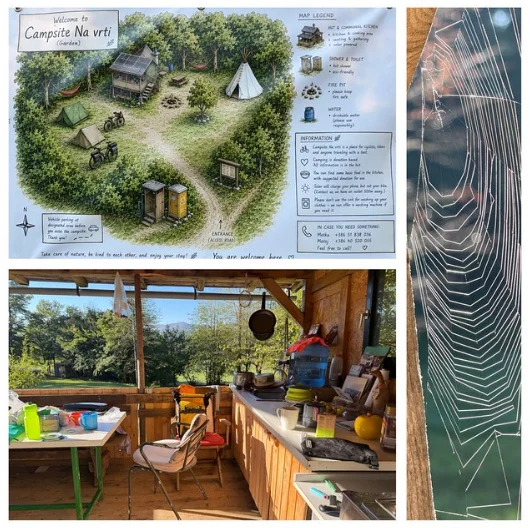
In Ilirka Bistrica, I saw that 10 km further on there was an unstaffed campsite, run on a donation basis, for slow-travelling tent travellers. It was worth cycling a little further, as staying in a B&B every day was proving a bit expensive.
And what a place it was: a toilet cubicle with toilet paper, a hot shower (gas-heated), a fridge (powered by solar panels) stocked with drinks, a kitchen with a gas hob and some basic provisions and drinks, a dining table with comfortable chairs, and electricity for my phone (no need for bike batteries). In Italy, I once paid 27 euros for a pitch in a patch of weeds, with nothing but a toilet without paper and a washbasin with cold water.
It’s a shame that the temperature here drops so much as soon as the sun sets behind the mountains, so I had to crawl into my sleeping bag quite early to keep warm.

Vela Voda Valley

27 Sep: Ilirska Bistrica/Kutezevo – Rijeka (40.5 km – 550 m elevation gain)

As soon as the sun disappeared behind the mountains, the temperature dropped in Na Vrti Campsite Very quickly. ‘Six degrees the next morning – not exactly an invitation to crawl out of my sleeping bag, but my natural alarm clock shows no mercy…’.
 
As soon as the sun shone on the campsite, just after ten, I could take off my down jacket and it got lovely and warm in the kitchen/sitting area overlooking the valley. There was Wi-Fi, so it was tempting to catch up on my social media here first.
 
The route to Rijeka, I thought, that’ll be easy because I’m heading down to sea level. And tonight I’ll be staying in Rijeka with Katleen Vuegen and Yanni Ratajczyk from Antwerp, friends of a cycling friend of mine from Antwerp who’d arranged this for me. They weren’t due home until late, so I didn’t need to rush today.
 
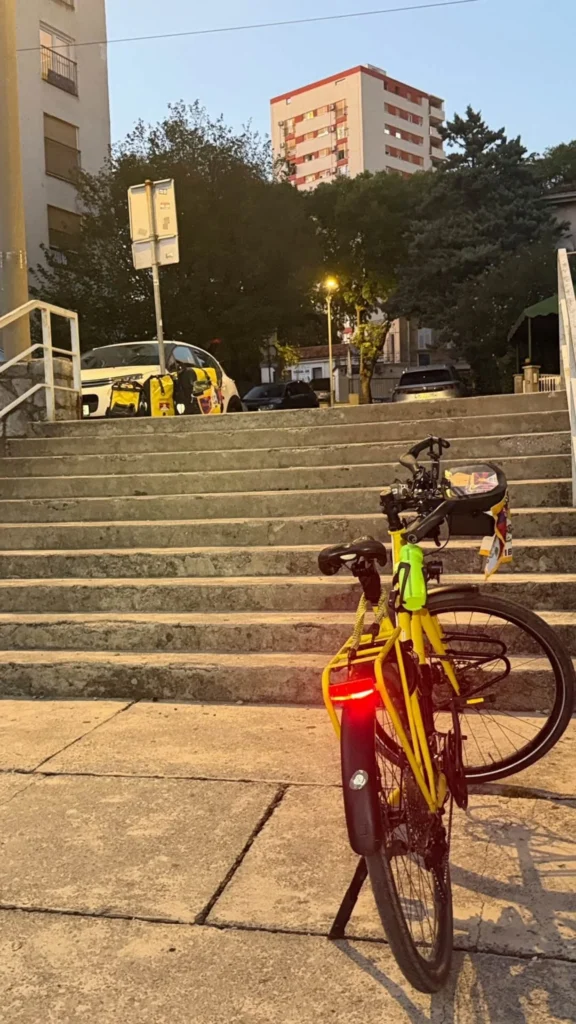
To get out of the valley of the Vela Voda However, before I could get over a ridge, I first had to tackle a 150-metre climb. Border crossings are usually situated at a mountain pass, which added another 100 metres. And it turned out that Yani and Katleen were in Trsat, living in one of Rijeka’s higher neighbourhoods: a 180-metre steep climb to finish with. The icing on the cake was a flight of steps. But it was more than worth the effort; I was given such a warm and heartfelt welcome.
 
Up until Rijeka, there was very little traffic, and on the non-labour-intensive works It was lovely and peaceful cycling. As it was Sunday, I found it wasn’t too bad in the city either. But they don’t have cycle paths here, nor do they have narrow lanes alongside the main roads… just a white line to balance on with your fully loaded bike – that’s all you’ve got to make do with.

Steep climb over obstacles to Trsat

What a brilliant bunch of people!
27 Sep: On Saturday evening, I spent the night at the unstaffed Na Vrti campsite in the village of Kutezevo. As I’ve already mentioned, it’s a brilliantly well-equipped campsite, with Wi-Fi, a fridge, kitchen utensils, a hot shower and a lovely seating area.
I couldn’t pay my contribution because I only had a few €50 notes, so I sent a text message to Metka and Majk asking them to send me their bank account number.
Before I left, I left a leaflet about my project for Tibet and a Tibet sticker on the kitchen worktop.
That afternoon, I received this text message in reply:
 
“Dear Eva,
We would like to express our heartfelt thanks for your visit and kindness. We are pleased to donate the sum of €13 to ☀️Save Tibet☀️
Wishing you every happiness and joy on your journey.
”Metka and Majk"
 
Aren’t they just brilliant people? I’m so sorry I didn’t get to meet them.

Na Vrti Campsite.

29 September: Rijeka – Trsat – Kraljevica (32 km – 460 metres of elevation gain)

Up and down three times
1) Climbing from Rijeka centre to Trsat: 200 metres of elevation gain – a lot of huffing and puffing. Followed by a tricky descent down steep, winding streets.
2) Second climb along the coast: not quite as strenuous, followed by a wonderfully gentle and long descent to Bakarac.
3) Apparently, you’re not allowed to finish on flat ground, but the third climb to Oštro Campsite Fortunately, that was the least difficult.

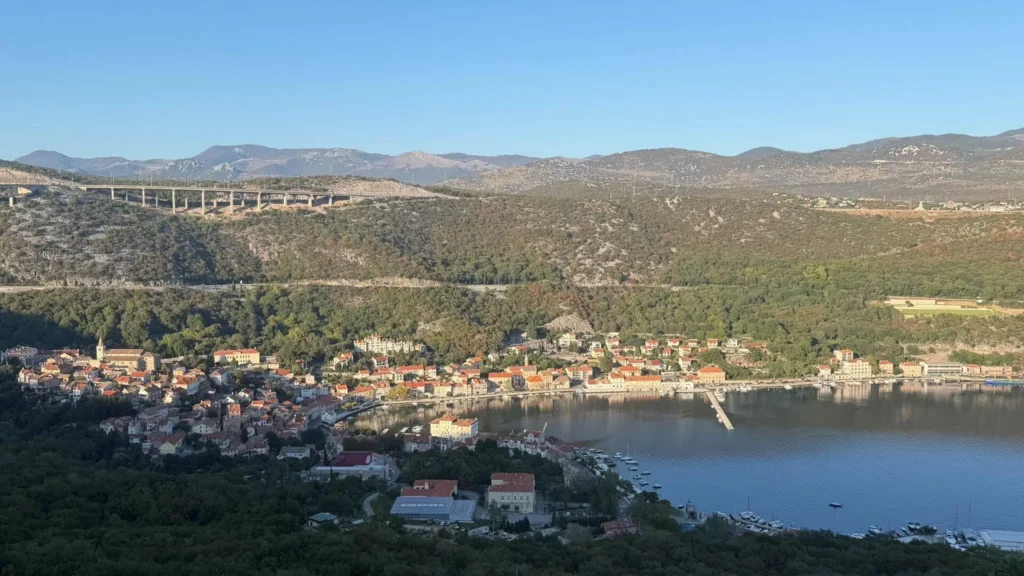
View of Bakar

30 September: Maintenance Day at Camping Oštro

When I got up, I could still feel the tiredness in my legs a bit, and I was also behind on a lot of social media posts.
The decision was made quickly: a day of rest and catching up, and a swim in the afternoon.
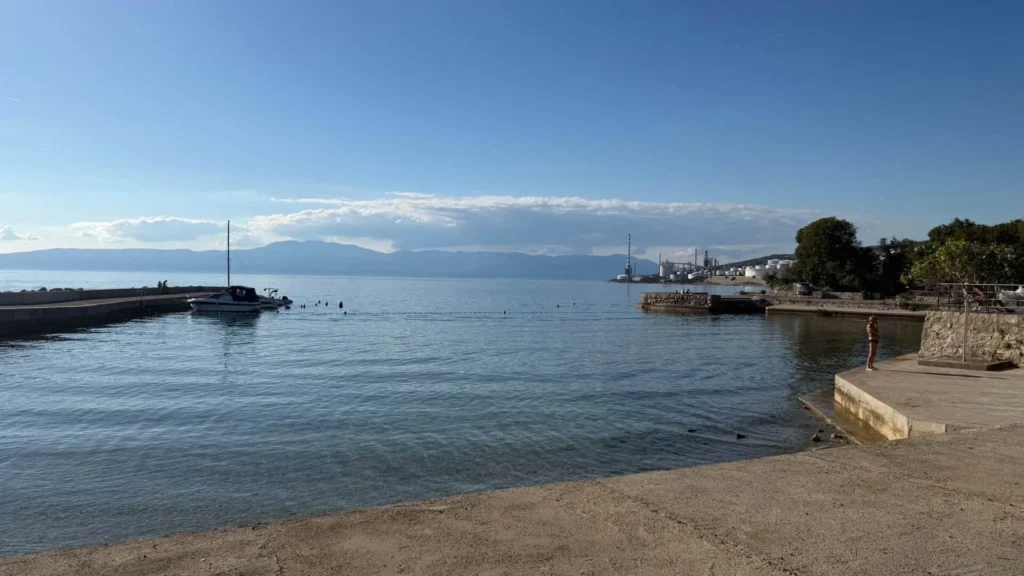
Oštro Campsite It has a lovely little concrete beach, though it’s a shame about the view of the oil depot on the other side.
To keep at it, I cycled 2.5 km to the shop in the village in the evening, which again involved a 70-metre climb. You can’t go anywhere around here without climbing….

Oštro Campsite Swimming Area

1 Oct: Kraljevica – Povile (34.4 km – 500 metres elevation gain)

Given the inevitable elevation gain here, my initial plan was to cycle short stages of 25 to 30 km with a maximum elevation gain of 400 metres, so as not to completely exhaust myself physically. A ride to Selce met those criteria.
Ahead of me lay the inevitable steep climb from sea level up to the road, followed by a much gentler climb stretching for about four kilometres.
 
When I got upstairs, I met four drivers from the opposite direction. They advised me to avoid the coastal road because there would be a strong Bora headwind there. So I replanned my route a little further on, to Povile.
As a result, I did have to tackle a second long and steeper climb, but taking it slowly works too, with regular short deacidification breaks interspersed with a bit of pushing the bike to give the muscles a different kind of workout.
 
Everything went smoothly on the first descent, but on the second one my bike started making some strange noises again. Better to be safe than sorry!
 
There are two campsites in Povile: Punta Povile Caravan Site and Camping sites. Given its name, I thought the first one was only for four-wheelers, so I drove on to the second. That one was situated on a deep, steep slope leading downwards, and as I wasn’t sure if it was open, I walked down there. It was a rather basic campsite, with no reception or anything like that. Someone on the small concrete beach told me that Autokamp was a ‘normal’ campsite, and I actually thought it was a good one at an affordable price.
 
At the ‘sea view’ spots, the Bora coastal wind was too strong for a tent, but there were also more sheltered spots in the woods. It wasn’t too bad, but even there, at one point, my Helinox the little chair suddenly 20 metres further on.

View of Crikvenica

2 Oct: Povile – Bunica (15 km – 190 m elevation gain)

A Bora wind which is almost impossible to cope with on a bike: a busy road and reckless drivers who sometimes whizz past you at close quarters. When I found myself pushing my bike even on a gentle incline against the wind, I’d suddenly had enough of this stretch. It was life-threatening; the wind literally blows you backwards or sideways. On sections that were somewhat sheltered, I carried on cycling; in strong winds, I walked.
 
Four kilometres before Senj, after barely 15 kilometres, I found a campsite for 10 euros – the cheapest of my entire trip. What’s more, it had spotless toilet facilities and a small, picturesque beach. Things can turn out better than expected sometimes 😃. However, because of the wind, I couldn’t enjoy it and by 7 pm I was already in my mind-boggling chained to the tent.
 
Tomorrow I’ll try cycling the 4 km to Senj and then I’ll see how it goes.
Depending on the Bora, which is due to ease off on Saturday, I can, after a 700-metre climb, continue along the inland route, where there’s less wind but it’s colder and there are no campsites, meaning much more expensive accommodation. That would actually take too big a bite out of my savings.
 
Tomorrow morning I could also go to the bus station in Senj and try to take my bike on the bus to Split get.
Ferries leave from Split back to Italy, but I could also cycle on to Dubrovnik. The decision will depend on how the 4-kilometre cycle ride to Senj goes….

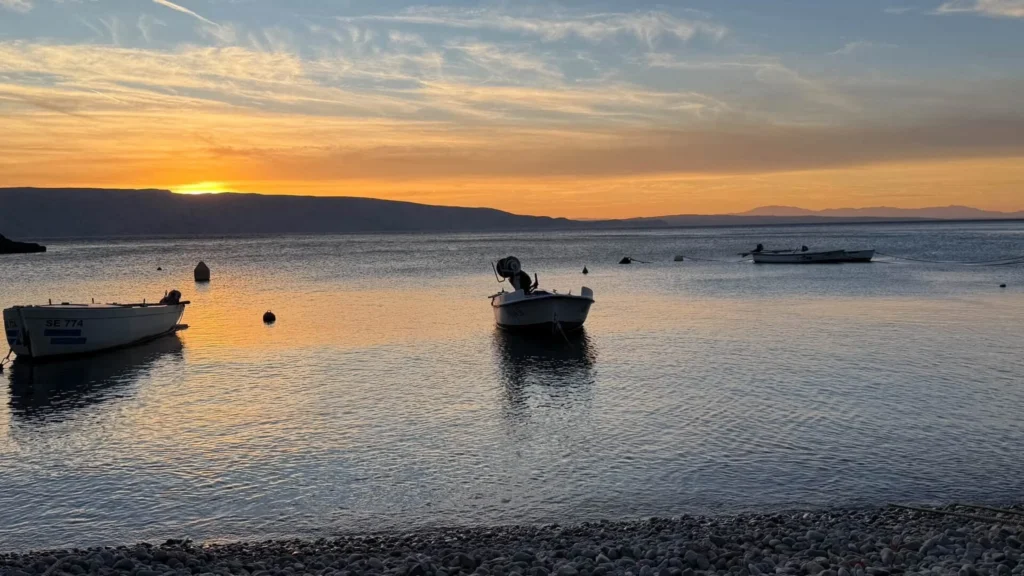
Sunset at Camp Bunica

3 October: Senj – Split (bus)

The decision between cycling along inland routes and taking the bus with my bike was a quick one: once again, the bora wind blew me off my bike.
 
In Senj, I got everything ready to load the bike onto the bus: turn the handlebars a quarter turn, take all the luggage off….
There was still plenty of space in the luggage compartment, so I was able to travel with my bike without any problems. What’s more, it was good value: around €50, whereas I’d seen online that the journey costs €49 and there’s a €10 cash surcharge for a bike. The mobile payment terminal on the bus turned out not to be working, so I paid in cash. Only afterwards did I realise I hadn’t been given a ticket, and I also noticed that Croatians were able to pay by card. I probably paid the drivers’ Sunday wages… Anyway, wages are low here, the cost of living is comparable to Belgium’s, and the bus wasn’t (at that point) full. The bus company won’t be any worse off for it.
 
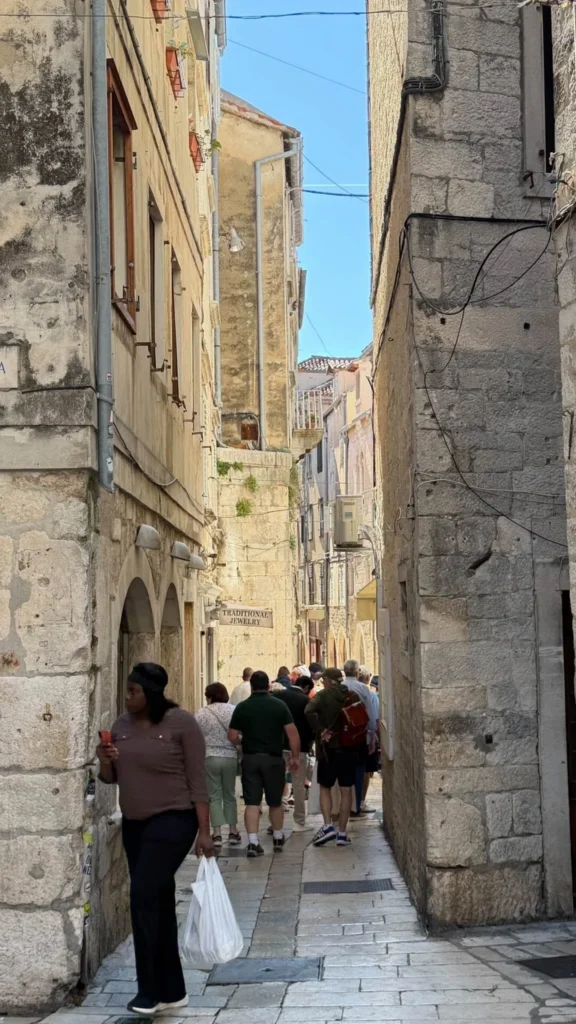
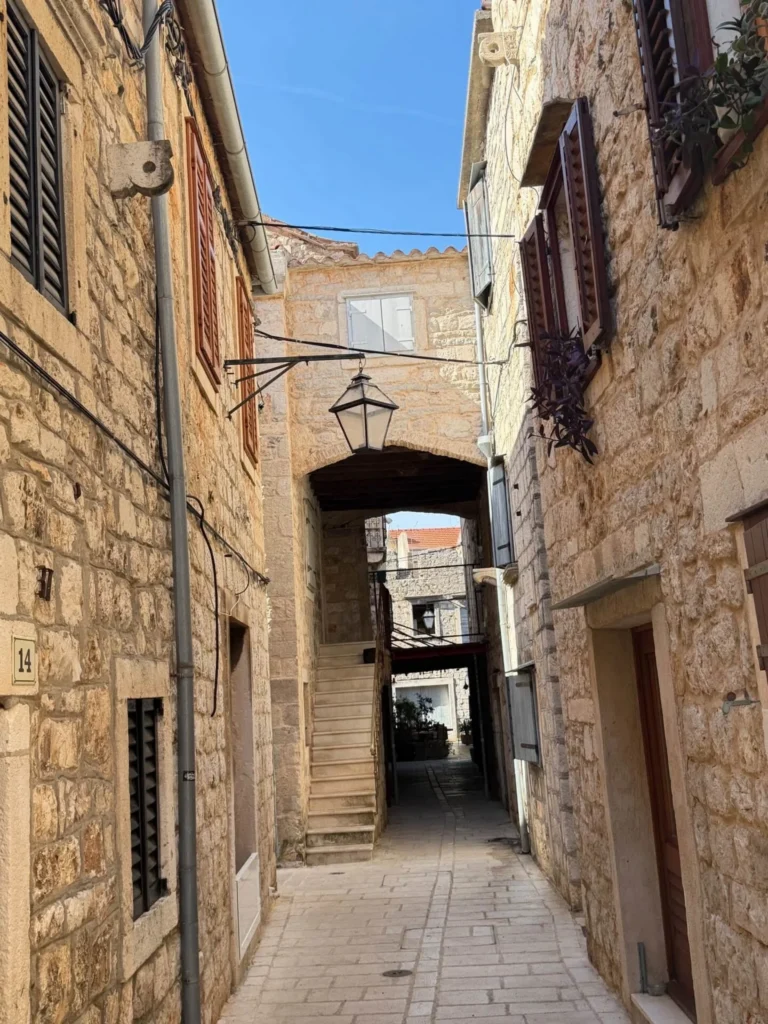
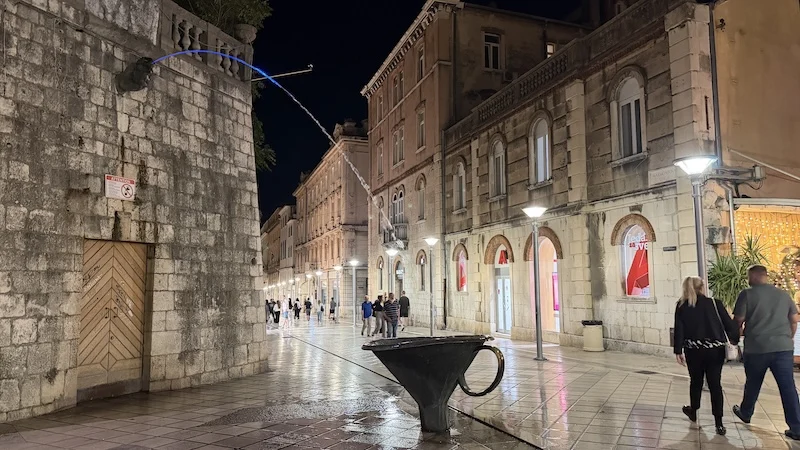
As I’d been sitting on my Q all day — the journey took six hours — I went for a stroll through the old town after dinner. It reminded me of Dubrovnik, with its shiny, slippery paving stones that you can easily slip on. Lots of very narrow alleyways. It’s actually one big entertainment district: restaurants, bars, snack and fast-food stalls, and, for daytime visitors, various little boutiques too. In the centre are the Cathedral, the Temple of Jupiter and the Treasury. The photos also include a few atmospheric shots from today.

Split – Old Town

4 Oct: Split – Museum of Fine Arts

Art, art and more art
On the ground floor, there are two temporary exhibitions: a retrospective exhibition of Jurica Kezic (1936–2021), a well-known Croatian painter whose rather sombre works on textured surfaces did not particularly appeal to me. It was only during his early period that he produced colourful works.
 
I found the exhibition featuring work by Croatian artists responding to the socio-political context more fascinating.
Artists from the ‘Biafra’ circle produced socially critical work or painted scenes depicting the everyday lives of ordinary people as they really are.
 
Particularly striking were the barely concealing line drawings by Dragutin Trumbetas on the life of Slavic migrants in Germany. He himself worked as a ‘guest worker’ in Frankfurt from 1960 to 1990. He is, in fact, an exception; the theme of migration is scarcely addressed in Croatian art.
 
The understated black-and-white photographs of a performance by Zlatko Kopljar, kneeling in a posture of worship before the symbols of financial and artistic power in New York, struck me as very powerful in terms of symbolism. In doing so, he explicitly criticised the imbalance between the insignificant individual and the systems of power in society at that time.
 
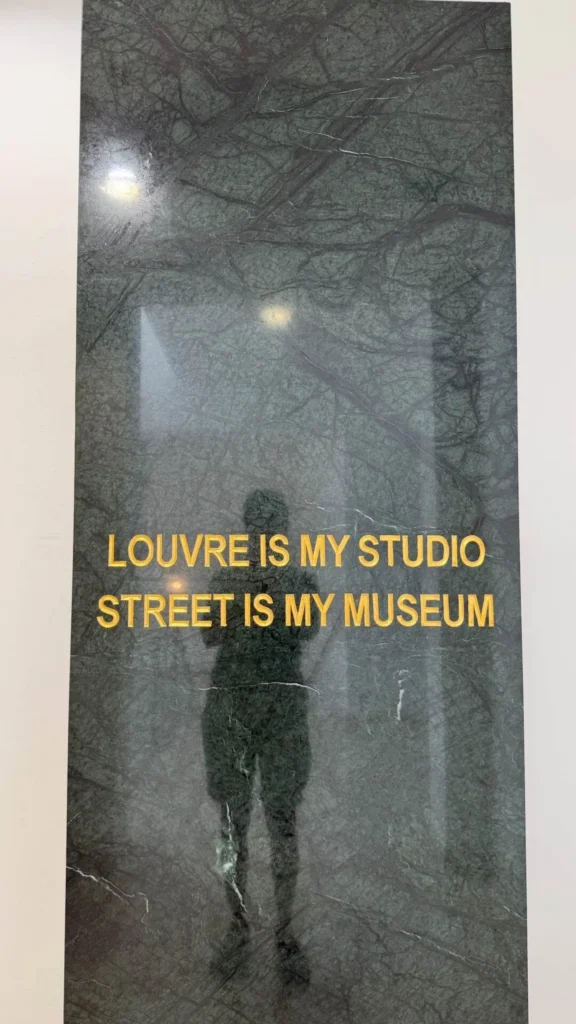
The permanent collection was on the second floor, featuring works from the 15th to the 20th century, mainly by Croatian artists. But by then my capacity to take it all in had already been exhausted, and I didn’t take any more photographs, except for the monumental line drawing of a complex battle scene from Tomislav Buntak and, to conclude, a conceptual work by Braco Dimitrijevic — a golden inscription carved into a marble column — which resulted in a special photograph.

Conceptual work by Braco Dimitrijevic

5 Oct: last day in Split

St Domnius Cathedral, Mount Marjan and a few more photos of the city and cats
Today, Monday, it was a bit less crowded in the old town and I finally bought a ticket to visit the cathedral. Yesterday, it was absolutely heaving in there. To be honest, I’ve had my fill of churches, but the octagonal shape of the Saint Domnius cathedral  It intrigued me. It also turns out to be the oldest functioning Catholic cathedral still in use in its original form, without any major renovations. It was consecrated in the 8th century, but it began its history in the 4th century as Diocletian’s Mausoleum.
 
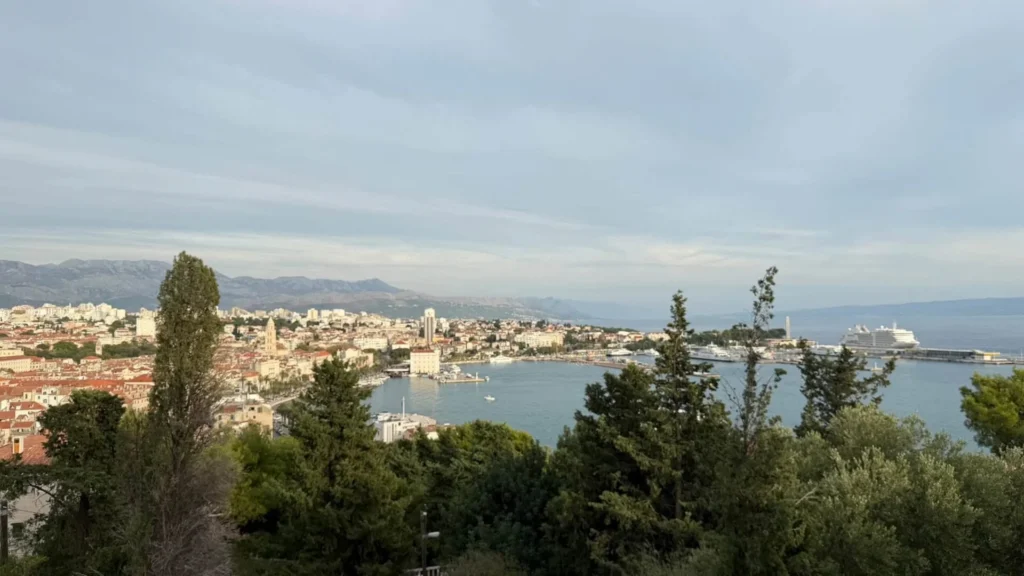
’That afternoon, I walked – or rather, I climbed the stairs – to the highest point on Mount Marjan, a 178-metre-high hill offering beautiful panoramic views of the city and the islands. According to ChatGPT, there were 800 steps from sea level. That could well be correct, if you count just over four steps for every metre of elevation.

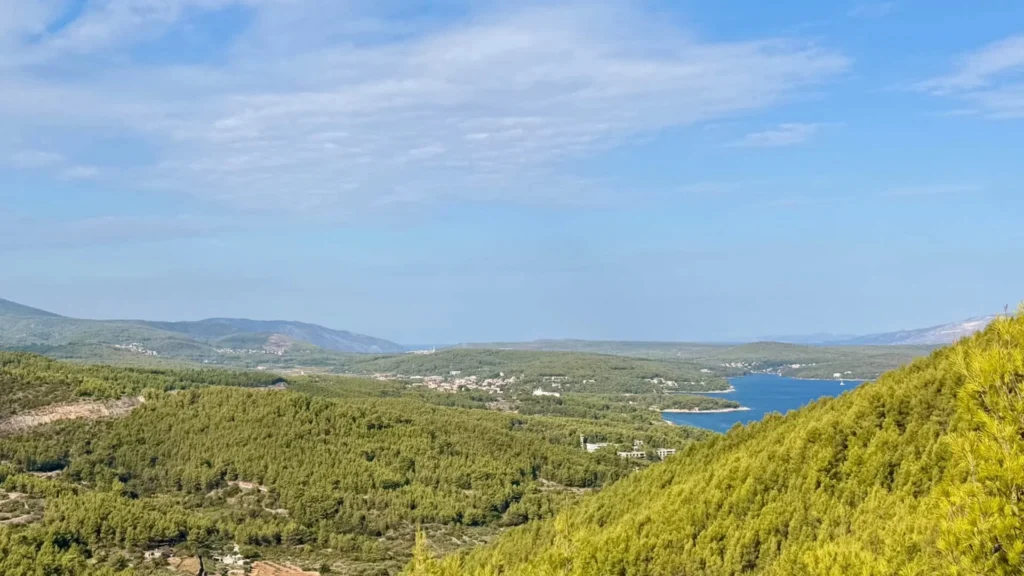
View from Mount Marjan

3 Oct: A moment of doubt in Split

 
When I was in on Saturday Split When I arrived, I told the hostel receptionist that I might stay until Thursday to catch the ferry to Bari to take. Bad weather is on the way and, out of season, the ferries only run once a week on Thursdays.
 
The receptionist replied that there were probably no more international ferries running, and checked again in the Jadrolinija app, which provides more up-to-date information than the website (?!). It stated that, due to damage to a ship, all crossings had been cancelled until 21 October. There was no information (yet) on whether any crossings would take place after that date, as international crossings normally cease on 20 October until the new tourist season begins.
 
The next day, I went to the Jadrolinija office to find out more, but they just shrugged: “We don’t know yet, ring back later.” And they were kind enough to give me the telephone number.
 
After giving it some thought — whether to stay in the Split area and wait for more clarity, carry on cycling towards Dubrovnik, or try to return by public transport — I decided to carry on cycling to Dubrovnik.
If there are no more ferries running there, the next option might be Bari in Montenegro, or otherwise Durrës in Albania. Ferries run from there to Italy all winter long. That’s the only town from which I could book a ferry at the moment. Let’s hope….

4 okt: Split - Jelsa (Mina beach, 11,1 km - 120 alti)

At last, another ‘pleasure ride’
Given the uncertainty over whether international ferries to Italy were running, I decided to carry on cycling and took a ferry to the island of Hvar. From there, I would be able to cycle about 60 kilometres south without having to deal with heavy traffic on the coastal road.
My first stop at Hvar was Mina Camp near the town of Jelsa.
 
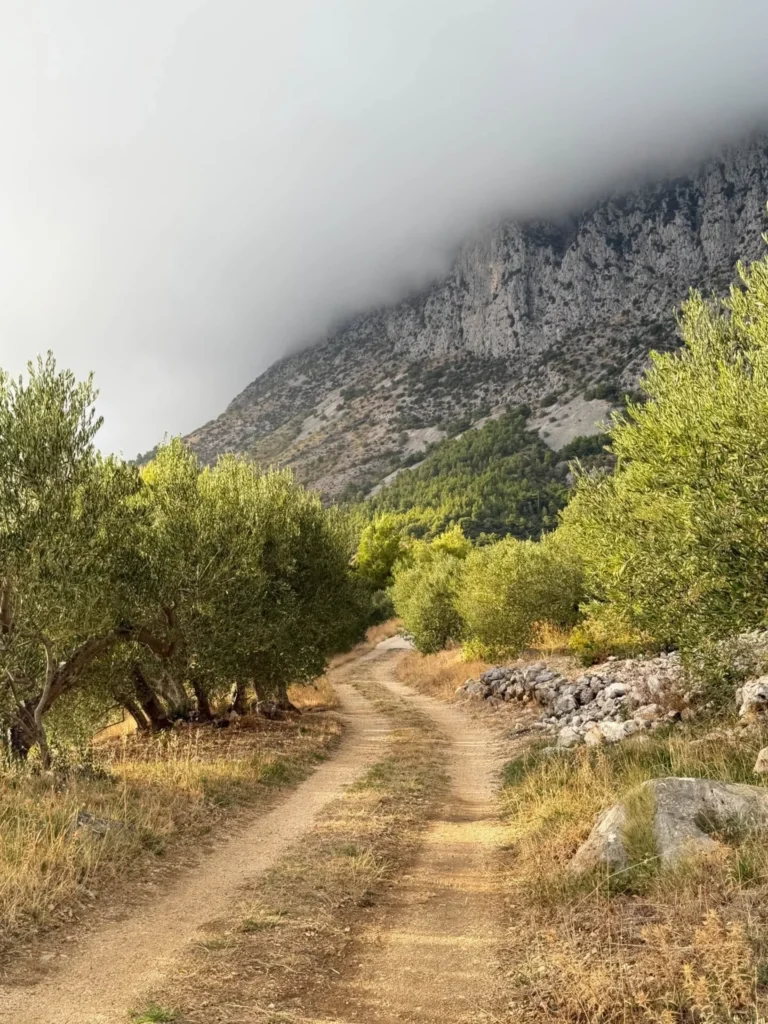
The ride there was lovely: a gently undulating country road through olive groves and vineyards, with the occasional village. It was a real treat to be out on my bike again, after all the wind and hustle and bustle of the previous rides.
 
At Kamp Mina, I was given a very warm welcome by my camping neighbours, Reiner and Nadja. I’m going to dedicate a separate post to them, because you don’t often come across such warm and friendly people.
The weather allowed for one more dip in the sea. Probably the last one, as I’ve got a tough cycle ride coming up on Wednesday and it’s set to start raining from Thursday.

Stari Grad

6 okt: Jelsa Mina beach - Drvenik (50,9 km - 650 alti)

 
Drie zware klimpartijen met tegenwind
Na een prachtige zonsopgang in Kamp Mina begon ik mijn tentboeltje in te pakken. Ontbijten doe ik pas daarna, vlak voordat ik vertrek zodat ik lang op mijn ontbijt kan ’teren’.
 
Er wachtte me een lange klim over 10 km met gemiddeld 6%. Ik zag er tegenop, maar eigenlijk viel het heel erg mee. Slechts een drietal keren even gestopt om een foto te nemen of wat te drinken.
Klim 2 was minder steil maar duurde vrij lang, en klim 3 was steil maar gelukkig kort. Die viel me redelijk zwaar omdat de vermoeidheid begon toe te slaan.
 
Tijdens de steile afdaling naar Sucuraj kletterde mijn fietsketting weer, wat betekent dat het vrijwiel hapert. Niet fijn, want in het ergste geval zou de derailleur kunnen breken. Ik moest dus opnieuw, zoals tijdens de afdaling naar Rijeka, in de allerzwaarste versnelling gaan en zachtjes blijven trappen om de ketting onder spanning te houden.
 
Het was een mooi en rustig traject over de heuvelrug van het eiland Hvar, door bossen, landbouwgebied, olijfgaarden en af en toe een mooi zeezicht. Na 18 kilometer één winkeltje waar ik 15 minuten voor de lunchsluiting aankwam. Gelukkig maar, want daar merkte ik pas dat ik mijn Platyplus waterzak op de camping vergeten was terwijl ik bijna door mijn drinkbus voorraad zat. Ik kocht er 1,5 liter water.
 
Een klein uurtje later kwamen mijn campingburen Reiner and Nadja me achterna gesneld met hun motor en de waterzak, waarvoor ik hen enorm dankbaar ben want die zak is veel makkelijker om mee te nemen op een fiets dan waterflessen (zie vorige post).
Een uur na aankomst in Sucuraj kon ik de ferry nemen naar Drvenik, een klein half uurtje varen.

Zicht op Jelsa, het lagere gedeelte van Hvar

6 Oct – 10 Oct: Drvenic – 4 days’ rest due to heavy rain

 
Four rainy days in a comfortable room
6–10 Oct: in Drvenic I was looking for a room because it was due to rain from Thursday until Sunday afternoon. I found a really good one with a bathroom and a kitchenette for just under double the price of a campsite without shelter a little further down the road. I didn’t hesitate.
What’s more, I started coughing more again at night, probably because of the headwind on the descents during Wednesday’s tough ride. Too much exposure to the cold air, although I never actually felt cold. A few days’ rest did me good.
 
I rubbed my hands together. I now had a small kitchen with a fridge, but there turned out to be very little available at the local Studenac supermarket. Some wilted vegetables and tinned food – that was all I had to make do with. Not even any yoghurt for breakfast.
 
I went for two walks along the beach path by the sea and one to a pretty little church 200 metres uphill via a tricky, overgrown rocky path.

Albert Fortis Trail

11 Oct: Drvenik – Bacinska Jezero (22.7 km – 260 m elevation gain)

Back on my bike, feeling refreshed
Vandaag wilde ik om 11 uur vertrekken om iets na tweeën in Ploce de ferry naar het schiereiland Peljesac te nemen en dan morgen over het schiereiland verder richting Dubrovnik te fietsen.
At 11 o’clock, however, it was still pouring with rain, and I didn’t fancy setting off in those conditions.
 
By 1 pm, the rain had eased to a light drizzle and I set off on my bike. As I couldn’t catch the ferry anymore, I’d planned a new route to Dubrovnik in the meantime: the first half along the coastal road, which isn’t busy at all now; the second half across the peninsula via a bridge a little further south.
 
I had a few climbs ahead of me today, but none were steeper than 6%, so they were perfectly manageable.
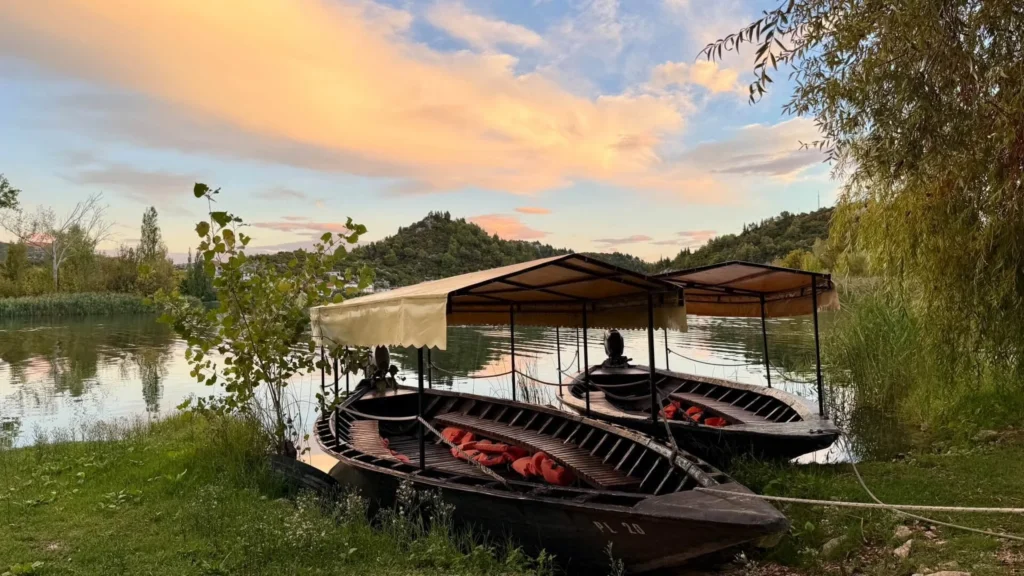
The mini campsite near the Lake Bacinska It wasn’t half bad: a reasonable price for this area (€15), in a quiet spot on the lakeshore and with very good toilet facilities.
 
The lake looked lovely for a swim: a set of steps led straight into the deep, crystal-clear water, which was still a comfortable temperature. It was chilly outside, though, and as I’d been battling a niggling cold, I decided not to go in after all.
 
By five o’clock, the grey sky had given way to a blue sky and the sun even peeked through for a moment. Before cooking our campsite meal, we went for a peaceful evening stroll along the lakeshore, surrounded by the lovely, rain-fresh scent of pine.
Bij Camping Baćinska Jezera

12 okt: Bacinska - Trpanj (8 km)

Nog nooit meegemaakt en opnieuw trajectdompertje
Het regende niet meer toen ik mijn tent opstelde, maar toen ik er gisteravond om 20:30 in ging, was ze wel kliedernat. Zelfs de binnentent was vochtig. Wanneer ik er echter vanochtend uit kroop, was ze bijna volledig opgedroogd, hoewel er bijna geen wind stond. Luchtverplaatsing is de beste droogmachine voor een natte tent. Dit heb ik nog nooit meegemaakt.
 
Er stond me een korte rit van 35 km te wachten via de Peljesac brug naar een nog geopende camping bij Brijesta. Ik had dus alle tijd om op de rustige minicamping mijn mail te lezen, foto’s bij te werken en wat te schrijven.
 
Na de inpak moest ik de fietsroute nog plannen in Komoot, want ik had die eerst in GoogleMaps uitgestippeld omdat die meer campinginfo toont. Maar GoogleMaps geeft in Kroatië geen fietsroutes….
Koude Komoot douche: met een fiets mag je niet over de Peljesac brug. Alleen voertuigen die minstens 60km/uur rijden mogen erover. Het is een nieuwe brug (2021). Hoe haalden ze het in hun hoofd om geen fiets- en voetgangersstrook te voorzien?
 
Ondertussen was ik te laat voor de 10:30 ferry naar Trpanj en zat er niets anders op dan die van 14:15 te nemen.
 
Van Trpanj naar Brijesta is 30 km en 400 hoogtemeters met 10 km over gravel.
Daar om 15:30 nog aan beginnen zag ik niet zitten, want iets na zessen begint het hier al te schemeren. Vandaag heb ik dus alles tezamen amper 8 km gefietst.
 
In het ticket kantoor van Jadrolinija in Ploce bevestigden ze me dat er in oktober vanuit Dubrovnik geen ferries meer naar Bari zullen varen. Het zal dus Durrës in Albanië worden, een achttal fietsdagen verder. Tenminste als ik meer dan 8 km/dag kan doen….

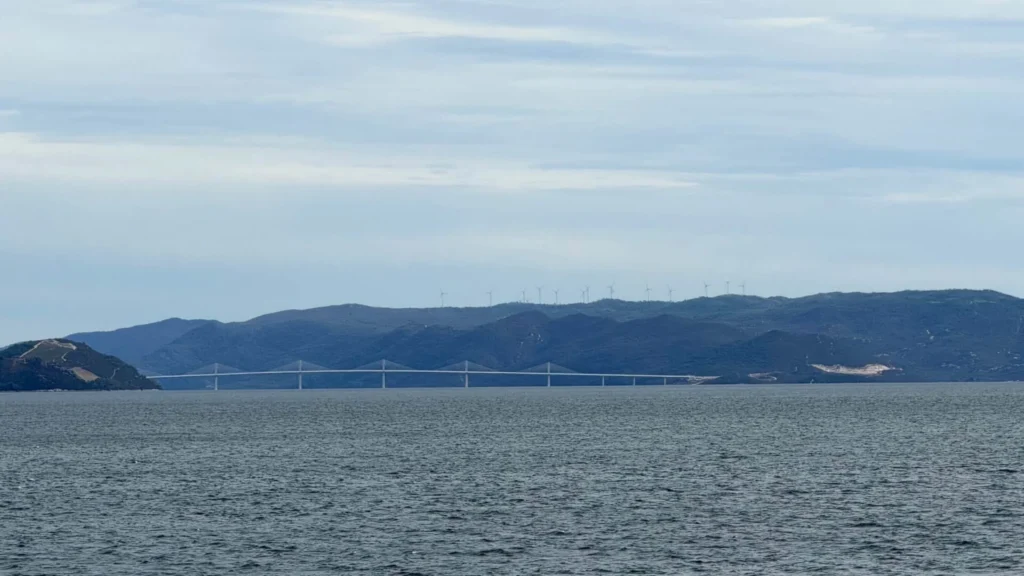
Peljesac brug – verboden voor fietsers

The photos of the cycle route are listed in reverse chronological order. Those of the towns are listed in chronological order. Information about the location is included in the title and/or description.

Share this post on social media

Read more...

en_GB